An Unforgettable Juneteenth
What #FreedomWalk2026 Team Members Experienced on June 19 was Profound!

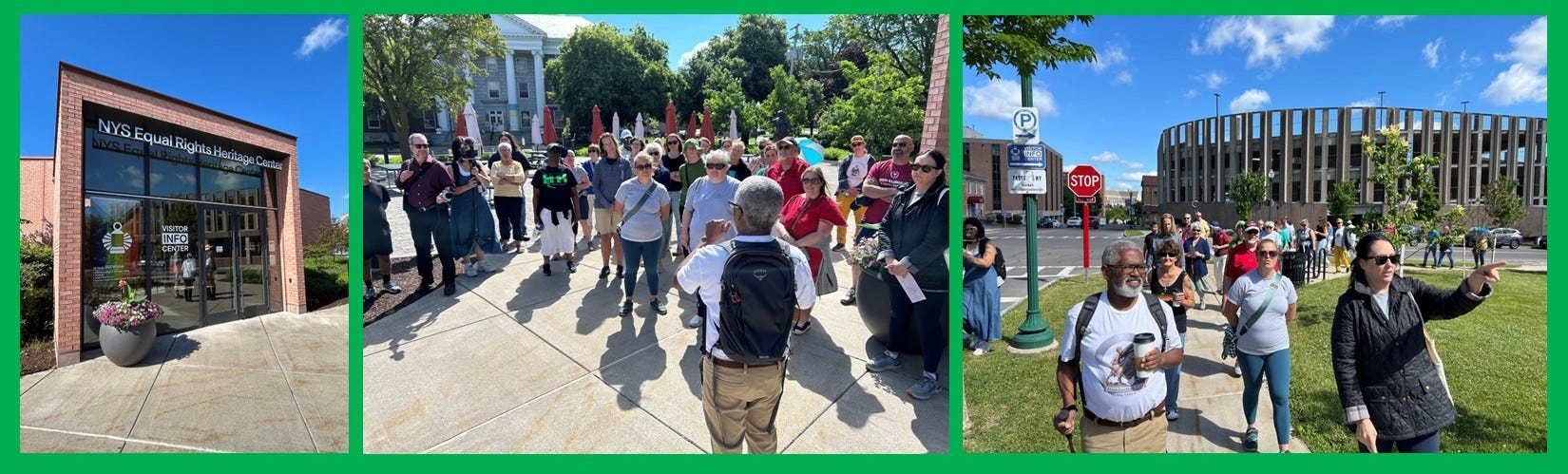
We drove to Auburn, NY for a morning walking tour that began at the New York State Equal Rights Heritage Center. The longer we walk, the more we learn and experience, it is clear that this 250th anniversary of the United States isn’t just for celebrating the revolution of 1776, it’s acknowledging the revolution for peace, justice and equity that is still needed and taking place now.
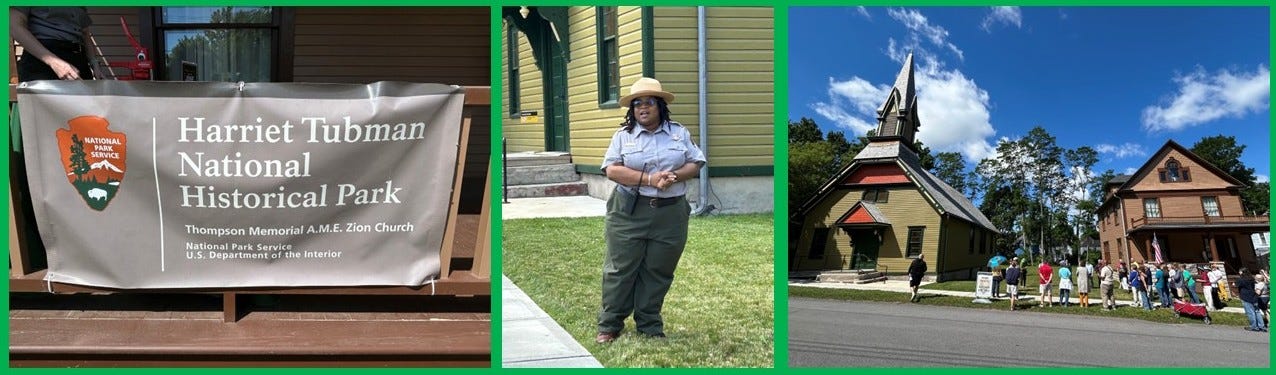
Our first stop was the Thompson Memorial AME Zion Church. Construction was completed in 1891. It’s now a site managed by the National Park Service (NPS). A Ranger, Brittany Lane, with the NPS provided an energetic and informative introduction to the building and its history. The church stopped meeting here in 1994. It became part of NPS in 2017. The current congregation is the one that we attended last Sunday. It’s the oldest AME church in Auburn.
Harriet Tubman bought land from William Seward in Auburn. She helped fundraise the $2,500 that it cost to build this church. She worshipped here and her memorial was held in the space in which we’re sitting in 1913. We later learned that Judith Bryant, Harriet’s Great, Great, Great Grand Niece was baptized in this same church.
In 2019, the bell tower of the church was struck by lightning for the 3rd time, and it caught fire (the first two times were in 1922 and 1927). The original bell is now on display in the sanctuary.
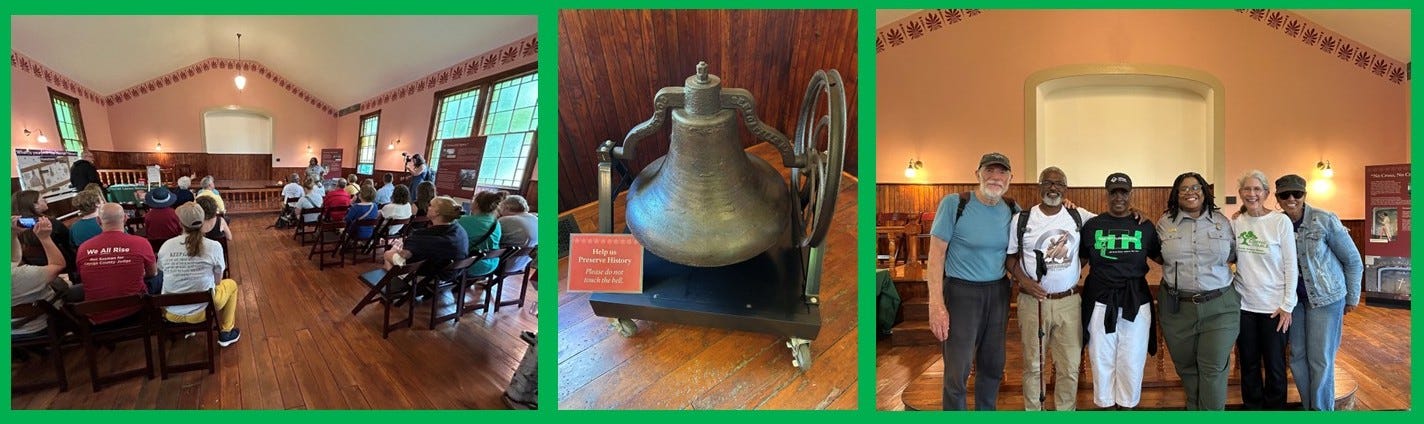
When Brittany was offered a job in New York with the National Park Service, she said, “No way. I’m a southern girl through and through.” She’s worked for years at National Parks in the South that highlight black history, Harriet Tubman, and the Tuskegee Airmen. And then they said, “Not even for Harriet Tubman?” It instantly became an easy choice. Her husband supported her and here they are.
After Brittany’s talk concluded, Matthew and I stood outside the church and the parsonage next door. There is a flag with 30 stars. We wondered why. It turns out that from 1848 to 1850 there were thirty states in the Union and Harriet escaped from slavery in 1849. Feels pretty obvious to us now why that flag is here.
We walked a few blocks to the cemetery where Harriet Tubman is buried. When she was buried in 1913, they planted a Norway Spruce, which was the only evergreen tree here at the time. It’s now huge, probably 100 feet tall. Matthew appropriately points out that that spruce tree is emblematic of everything Harriet stood for. A giant in the cemetery with a root system, reaching out to all the other gravesites and other trees and plants in the cemetery symbolizing the interconnectedness of everything, not to mention a resting spot for birds and shade for those who are buried here and those who visit. Everyone then gathered behind Harriet’s headstone and held hands with several then touching the tree. Interconnectedness personified…
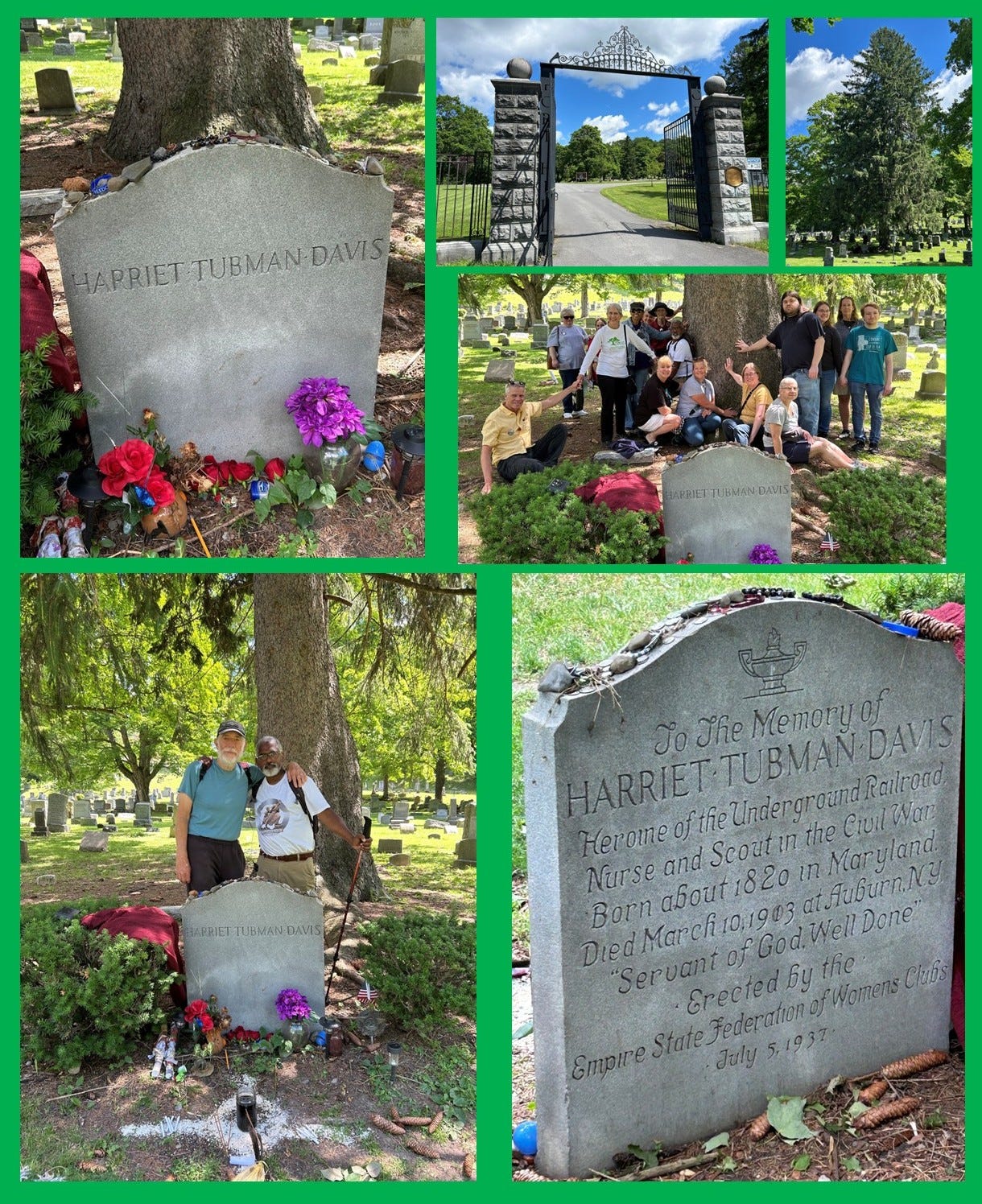
I’m curious why Harriet and her husband are buried so far apart from each other in this cemetery, a distance of several hundred yards. I asked Judith Bryant later over lunch. Harriet bought the plot where her husband is buried, and Judith believes Harriet expected to be buried next to him, but her nephew died soon after her husband and he was buried there. Her husband predeceased her by 25 years. She bought the second plot for herself and her brother. “That’s my story, and I’m sticking to it. There’s no one left to tell me any different,” she smiled. And we laughed in agreement.
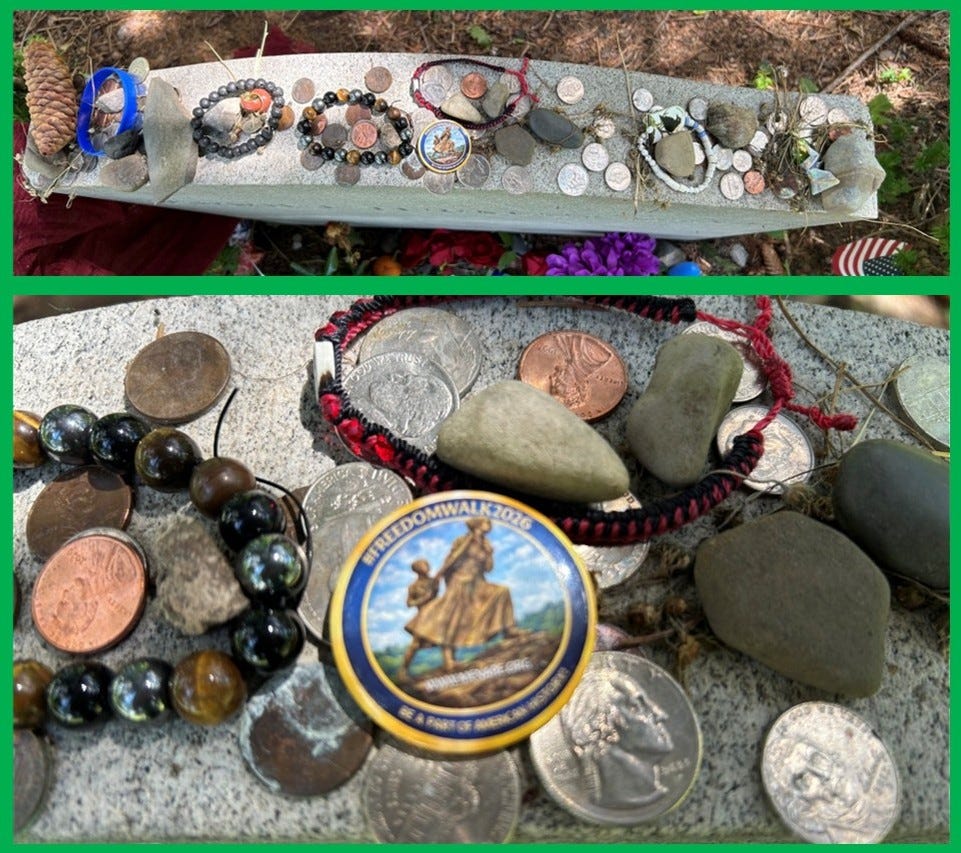
I believe it is important to remember that every single person buried in this cemetery (and every cemetery) had a story of their life; many stories. How amazing that we are spending Juneteenth at Harriet Tubman‘s church, gravesite, and later at her home, which is only about 100 yards from the cemetery. I’m feeling humbled and overwhelmed with gratitude for this opportunity and respect for Harriet Tubman. As we departed, we respectfully left a #FreedomWalk2026 button on top of her headstone. She is a powerful inspiration for our pilgrimage!
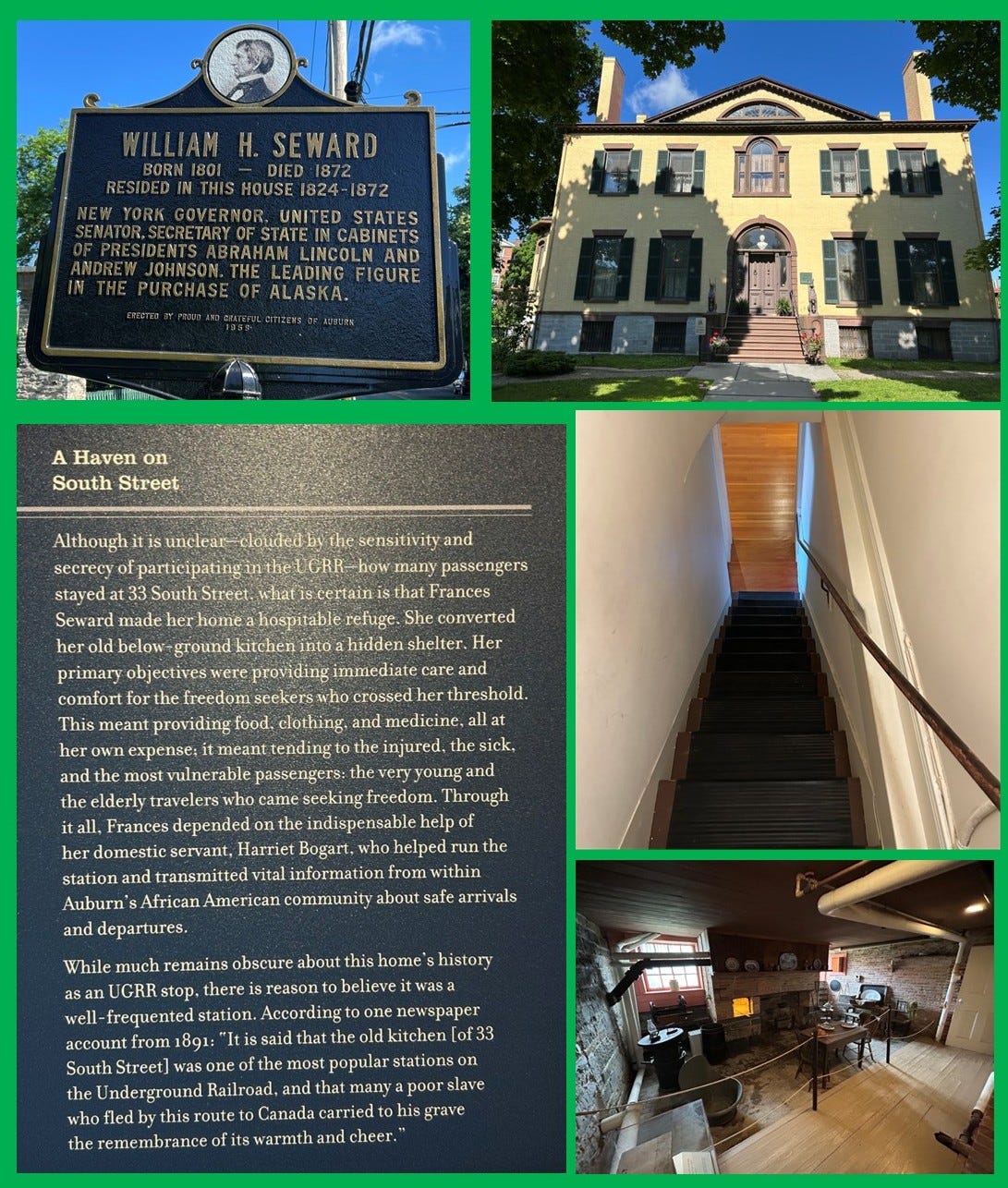
After our tour concluded, many of our group stood around talking about all we’d seen and heard. Matthew and I were walking and talking ahead of the others. We stopped at the William Seward house which is very close to The Equal Rights Heritage Center where we began. The basement of the Seward home was a hiding place for Freedom Seekers. We told the staff inside that we didn’t have time for a tour, but could we just see the basement? We told them what we were doing with #FreedomWalk2026 and they smiled and led us downstairs.
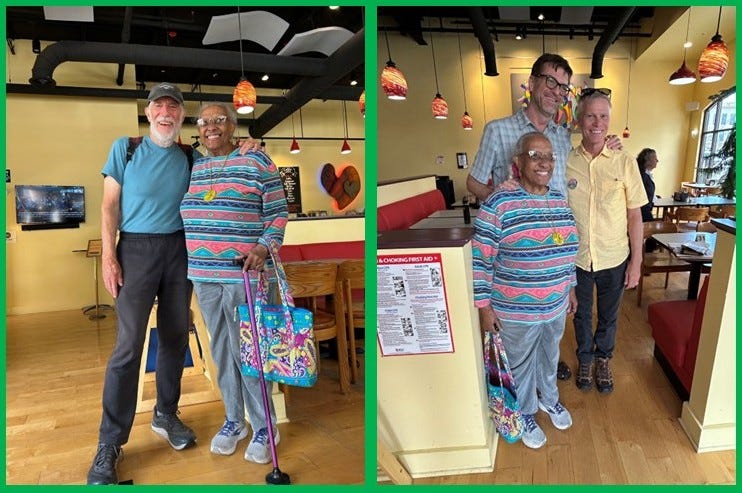
Kip, Matthew, Tony, Lynda and I had lunch with Judith Bryant after our tour. Just being with her is another amazing treat on this important holiday.
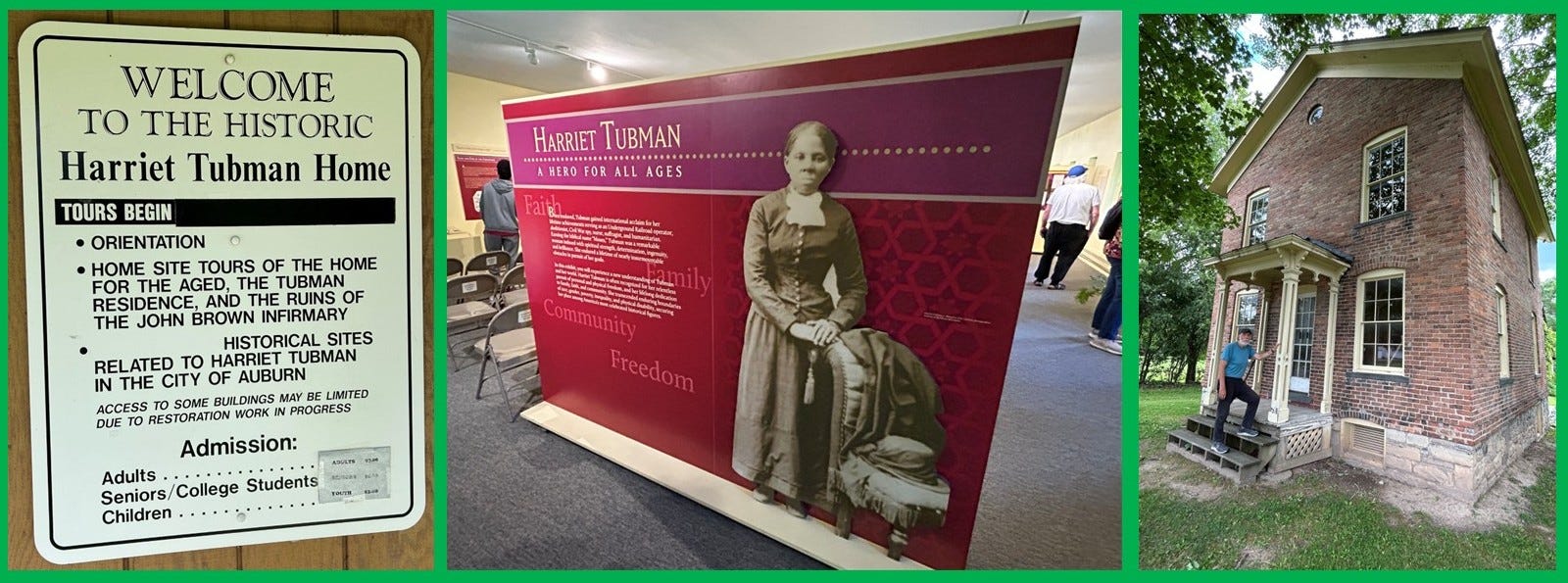
Then Kip, Matthew and I drove to the home where Harriet Tubman lived. There’s a wonderful museum there where Matthew and I bought T-shirts and postcards and took in informative displays. The house was built by her husband who was a bricklayer. The house isn’t open for touring, but just standing outside, as well as on the front steps, and gazing at her home from all sides is so powerful.
After lunch we drove to the historic 1816 Farmington Friends Meeting. Across the road from the current Meeting house is a building being renovated. It’s the same building the Quakers first met in beginning in 1816, though it is now in its third location. We’re told it was built to hold 1,000 people. Though it appears that it would hold 600, an historic architect noted how much smaller people were in 1816. The structure was built for people with a 12” width at the hips whereas today it’s 18”. We’ve grown, America!
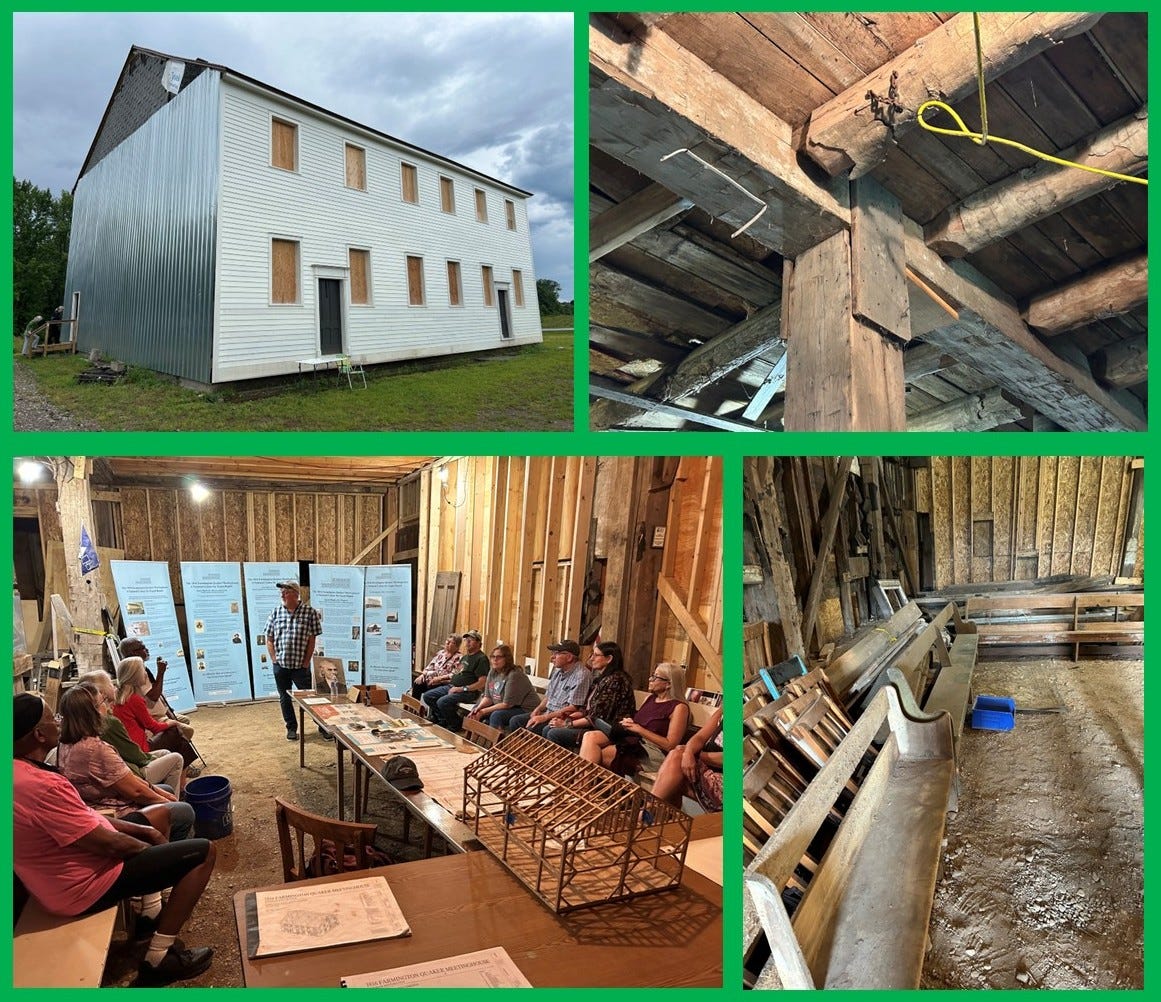
You can learn more about Farmington Quakers HERE and about the historic Meetinghouse HERE.
We learned from our tour guide of the historic building that in Quakerism, faith says each of our inner lights communicates with God. Therefore, we are all equal, which inspired the Quaker commitment to abolition. Frederick Douglass spoke here many times. This Meeting and the whole neighborhood supported and housed Freedom Seekers.
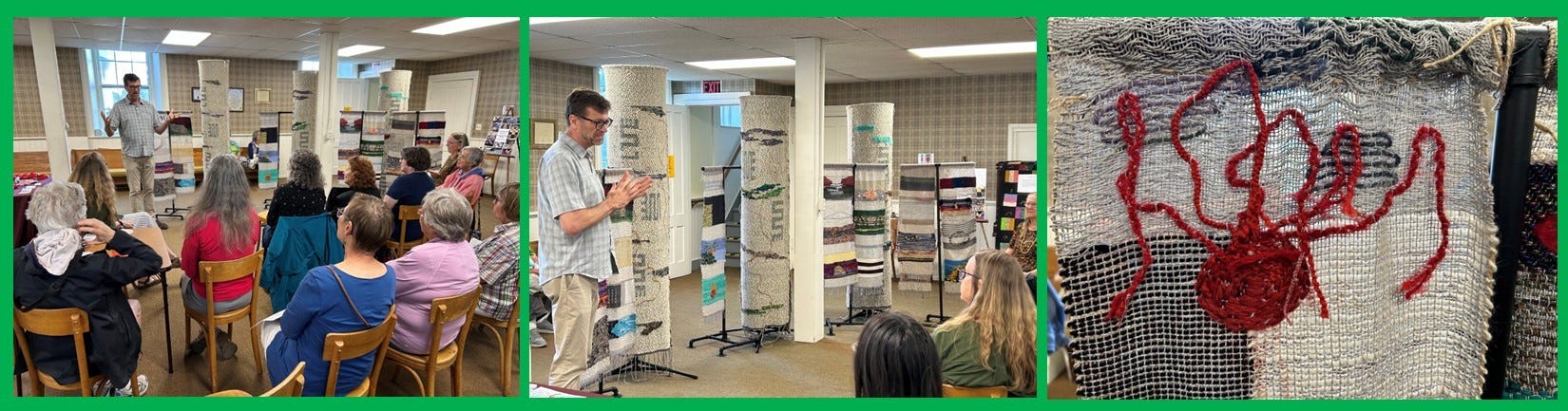
The #FreedomWalk2026 team and dozens of others who joined us today were treated to pizza and strawberry shortcake. Then Kip gave a presentation about his textile project prior to the evening activation in the Meeting room.
The Activation upstairs in the current Meeting began with the choir singing, “Follow the Drinking Gourd” from the 1800’s referring to the Big Dipper and following the North Star. Then we were treated to some reenactments of Austin Steward, who wrote Twenty-Two Years a Slave and Forty Years a Freeman in 1857, and of General Gordon Granger, who announced freedom in Texas on June 19, 1865. Granger was from this region of New York.
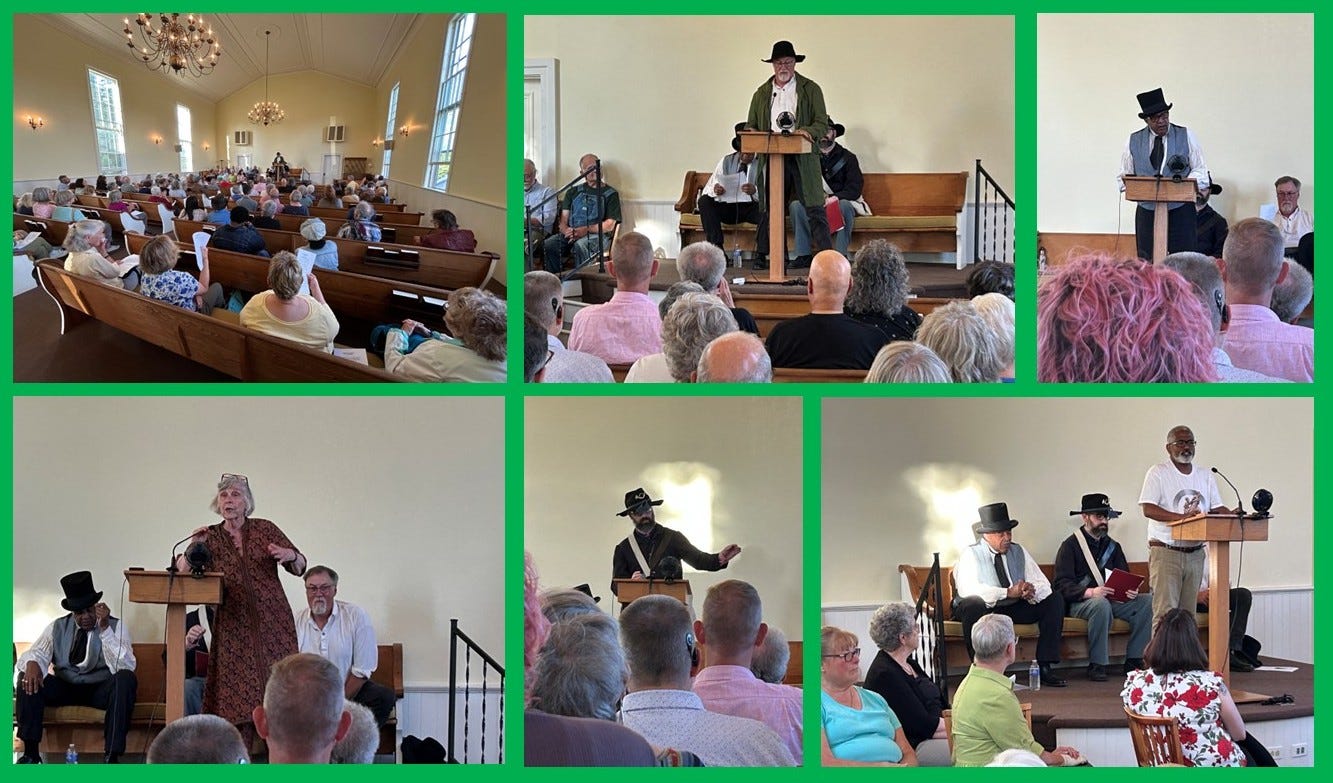
Judy Wellman, leader of the 1816 Meeting restoration project, led us singing “Spirit of Freemen, Wake” sung to tune of “America.” This abolitionist song was performed at the 1848 Massachusetts Anti-Slavery Society convention in Abington, Massachusetts
Tony then shared stories about #FreedomWalk2026. He noted that regarding Star Wars Day (May the Fourth be with you), the galaxy is not so far away and not so long ago. Like Luke, Hans, Leia and Yoda, present-day abolitionists are a scrappy group of rebels working together to confront and overcome evil and support freedom. May the Fourth be with you!
I’m quite certain that I will never in my lifetime have a more meaningful experience of Juneteenth than we have had today.
Bonuses:
Here’s an article about this day’s gathering at the 1816 Farmington Friends Meeting.
If you’d like to watch this gathering, the singing, the reenactments, and Tony’s presentation, CLICK HERE. Prepare to be inspired!
What a remarkable journey. Thank you so much for sharing it.
Thank you so much. I was so moved by your visit to the cemetery, where Harriet Tubman is buried. I had to stop reading, and paused a moment.